Subsidies Are Making the Switch
Easier Than Ever
by OMI Team
28 July 2026
For Indian farmers, solar pumps have moved from a premium option to a genuinely practical choice, largely because of government subsidy schemes that dramatically reduce the upfront investment. The PM-KUSUM scheme, which stands for Pradhan Mantri Kisan Urja Suraksha Evam Utthaan Mahabhiyan, has been designed specifically to help farmers replace diesel and electric pumps with solar-powered alternatives. Understanding how the scheme works, and what you need to do to access it, is the first step towards reducing your running costs significantly.
How Solar Pumps Work for Agricultural Use
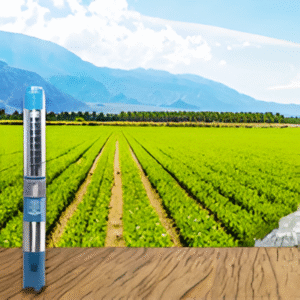
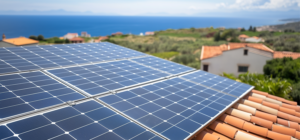
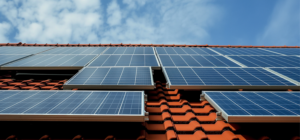
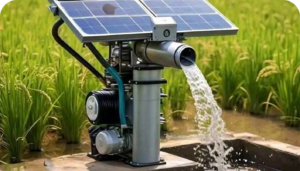
A solar pump system for agricultural use consists of solar panels, a controller and a pump motor: either a surface pump for open water sources or a submersible pump for borewells. The solar panels generate DC electricity from sunlight, which the controller converts to run the pump motor. There’s no separate generator or grid connection required for daytime operation.
What makes solar practical for irrigation
Solar pumps are well suited to agricultural irrigation because peak sunlight hours coincide closely with peak water demand during the growing season. Unlike diesel pumps, there are no fuel costs or fuel supply logistics to manage. Unlike grid-connected electric pumps, you’re not dependent on erratic power supply schedules that many rural areas still face. The system runs directly from the sun during daylight, and some setups include battery storage for limited operation outside sunlight hours.
Surface vs submersible configurations
Surface pumps draw water from open sources such as ponds, canals or shallow wells where the water table is relatively close to the surface. Submersible pumps are designed for borewells and can draw from much greater depths. The appropriate configuration depends on your water source. Horsepower rating, panel capacity and pump model selection should all be based on your actual water requirements and source depth.
Understanding PM-KUSUM: What the Scheme Offers
PM-KUSUM is a central government programme administered through state nodal agencies and the Ministry of New and Renewable Energy. It has multiple components, but the one most directly relevant to individual farmers is the standalone solar pump scheme, which provides financial support for installing solar pump systems on agricultural land.
How the subsidy structure works
The subsidy is split between central government and state government contributions. Combined, these can cover a very substantial portion of the installation cost, with farmers typically required to contribute only a modest share directly. The exact split varies by state, because each state government adds its own contribution on top of the central government’s support. Some states have structured the farmer contribution further so it can be met through bank financing, meaning the out-of-pocket cost at installation can be very low.
Who is eligible
Eligibility under PM-KUSUM is primarily for individual farmers, farmer cooperatives and water user associations. Agricultural land ownership or tenancy is typically required, along with a valid land record. Some states also require a minimum land holding to qualify for particular pump capacities. Farmers who currently use diesel pumps are specifically targeted as a priority group, given the fuel cost savings and environmental benefits involved.
Navigating the Subsidy: The Application Procedure
The application process is managed through each state’s nodal agency, typically the state renewable energy development authority or a designated agricultural department body. The process varies somewhat between states, but the broad steps are consistent.
Registration and documentation
Farmers typically register through the state nodal agency’s online portal or at designated district offices. Documents required generally include land records, identity proof, a recent bank account statement and Aadhaar. After registration approval, the farmer is assigned a solar pump from an index of government-empanelled manufacturers and suppliers. You must use an empanelled supplier to qualify for the subsidy.
Installation and commissioning
Following approval, the empanelled supplier installs the system and the state agency inspects and commissions it before the subsidy is released. This process protects farmers from poor-quality installations, because the system must meet technical specifications to pass inspection. After commissioning, the subsidy is typically disbursed directly to the supplier, and the farmer pays only their agreed contribution.
The Practical Case for Switching
The financial case for switching is compelling even before you consider the subsidy. Diesel pump operation involves ongoing fuel costs that fluctuate with fuel prices. Grid electricity, where available, involves tariffs that tend to rise over time. A solar pump, once installed, has minimal running costs beyond routine maintenance.
Running costs and maintenance
Solar panel systems have no moving parts and require relatively little maintenance beyond periodic cleaning and occasional inspection of wiring and mounting. The pump motor and controller require maintenance much like a conventional electric pump. Compared with a diesel engine, the maintenance requirements of a solar system are generally lower, and there’s no fuel system to service.
Income from surplus solar generation
Under certain components of PM-KUSUM, farmers who generate surplus solar electricity can sell it back to the grid through distribution companies, creating an additional income stream. This aspect of the scheme is at different stages of implementation across states, so it’s worth checking what your state currently offers when you make your application.
The combination of PM-KUSUM subsidies and the long-term cost advantages of solar pumps makes this a well-timed switch for farmers who are still running diesel or unreliable grid-connected systems. Getting the right system for your land and water source is important, and working with an experienced supplier makes that process considerably more straightforward. OMI Pumps has been manufacturing agricultural pumping systems since 1972 and can help you identify the right solar pump configuration for your specific requirements.
Talk to our solar team
Not sure which solar pump suits your land?
Share your water source, depth and acreage — we’ll recommend the right configuration.
Company Profile
Our Pride – Our Pumps
Let's help you!
Reach Us
Mail Us
Address
FROM THE BLOG
More Articles
Solar Motor Pumps in Coimbatore: A Practical Guide to Costs, Subsidies and Choosing the Right System
Choosing the right solar motor pump in Coimbatore involves more...
How Government Subsidies Are Making the Switch Easier Than Ever
For Indian farmers, solar pumps have moved from a premium...