Why do submersible pump motors face higher risks during the monsoon?
A submersible motor sits deep in a borewell or open well, connected to the surface by a long cable. During thunderstorms, supply voltage can fluctuate sharply, and lightning striking nearby can send a surge along overhead lines and into that cable. Power often trips and returns several times in a short spell. Each restart under unstable voltage puts stress on the motor windings, and moisture finding its way into a starter or joint adds the risk of a short circuit.
Is your starter ready for the season?
The starter or control panel is the motor’s first line of defence. Ask your electrician to check that:
- The enclosure is sealed, mounted off the ground and protected from rain and splashing
- Contacts are clean, with no pitting or burn marks
- The overload relay is set correctly for the motor’s rated current
- Single-phasing and voltage protection, where fitted, are working
- Terminals are tight and there are no signs of rodent or insect damage.
A starter that has sat in a damp shed through the summer can look fine and still fail under load, so testing it before the rains is far better than finding the fault in November.
How important is earthing?
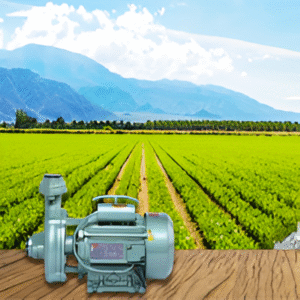
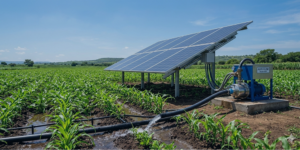
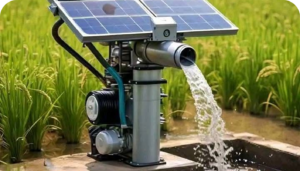
The region’s mix of borewell depths and seasonal yield variation means pump selection matters. Solar submersible and monoblock systems sized correctly for a given borewell can deliver the flow rates irrigation needs without drawing on grid power at all, whilst open-well systems suit farms drawing from shallower sources. Matching pump capacity to actual borewell yield remains just as important with solar as with any grid-connected setup.
What does a typical solar pump setup look like for farms in the region?
Proper earthing gives fault current and surges a safe path to ground, protecting both the motor and anyone who touches the pump house. Earth pits can dry out, corrode or become disconnected over time. Your electrician can test the earth resistance and inspect the earth connections at the starter and the pump. If your farm features a lightning conductor, ensure it is inspected too.
Does a surge protection device help?
A surge protection device fitted at the panel can divert sudden voltage spikes away from the motor and starter. It will not make equipment immune to a direct lightning strike, but it can reduce damage from the more common surges carried along the supply line. Your electrician can advise on a suitable device for your supply and starter. During a severe thunderstorm, switching the pump off at the main supply is still the safest course.
Are your cable joints watertight?
The joint between the motor lead and the drop cable spends its life underwater, so a poor joint is a common cause of motor failure. Signs of trouble include frequent tripping, a rise in current draw, or low insulation resistance on a megger test. If the pump has been pulled for servicing, ask for the joint to be remade with a proper waterproof kit. Above ground, check that cables are not chafing against the well casing and that any outdoor runs are protected.
Why does dry-run protection matter before rabi pumping?
Water levels can rise quickly after the rains, then fall again once rabi irrigation begins in earnest. A motor running without enough water around it loses its cooling and can overheat. Dry-run protection, which stops the pump when the water level or load drops, is worth fitting or testing now. It is also a good time to confirm that the pump is set at a depth that suits the well’s current water level.
What should you do after a storm?
If power has been unstable, wait for the supply to settle before restarting the pump. Listen for unusual noise, watch for reduced flow and look for tripping. Any of these signs is a reason to call your electrician rather than restart repeatedly.
OMI Pumps has manufactured pumps in Ganapathy, Coimbatore, since 1972, with borewell submersibles from 80 mm to 250 mm as well as openwell and monoblock models. If your submersible pump motor needs servicing or replacing before rabi pumping begins, speak to us at OMI Pumps about the right pump for your well.